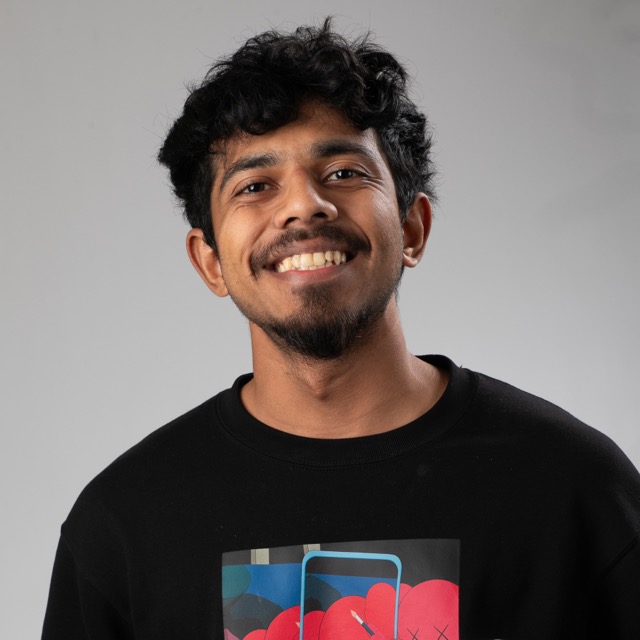
PhD Student, Columbia University
Shreyas Havaldar
I’m a third-year PhD student supported by the Presidential Fellowship, working with Prof. Elias Bareinboim in the Causal Artificial Intelligence Lab at Columbia University. My research focuses on causal reasoning in generative and world models: understanding when these models can answer counterfactual questions, and building ones that can.
Before Columbia, I was a researcher at Google DeepMind in Bengaluru, working on trustworthy machine learning with Dr. Aravindan Raghuveer, Dr. Karthikeyan Shanmugam and Dr. Rishi Saket. I hold a B.Tech. with Honors in Computer Science from IIT Hyderabad, where I worked with Prof. Vineeth N. Balasubramanian in Lab 1055, the Machine Learning and Vision Lab.
Somewhere, something incredible is waiting to be known.
News
- 2026 CaLM: Causal Language Modeling for Counterfactual World Simulations, coming soon!
- 2026 CoBe, our benchmark for conversational counterfactual text editing, will be a poster at the AI4GOOD and TAE workshops @ NeurIPS ’26.
- Nov 2025 Epidemiology of Large Language Models: A Benchmark for Observational Distribution Knowledge is out on arXiv, and under submission at DMLR.
- Fall 2025 Teaching Assistant for Causal Inference I at Columbia, taught by Prof. Elias Bareinboim.
- Sep 2024 Joined Prof. Elias Bareinboim’s Causal Artificial Intelligence Lab at Columbia University as a PhD student, supported by the Presidential Fellowship.
Selected work
- CaLM: Causal Language Modeling for Counterfactual World Simulations Coming soon
- CoBe: A Benchmark For Conversational Counterfactual Text Editing Poster at AI4GOOD, TAE @ NeurIPS ’26
- Epidemiology of Large Language Models: A Benchmark for Observational Distribution Knowledge Under submission at DMLR
- Learning from Label Proportions: Bootstrapping Supervised Learners via Belief Propagation Poster at ICLR ’24 & Oral at Regulatable-ML @ NeurIPS ’23
- Improving Fairness-Accuracy tradeoff with few Test Samples under Covariate Shift Poster at AAAI ’24 & Spotlight at AFT @ NeurIPS ’23